<feed xmlns="http://www.w3.org/2005/Atom"><author><name>Ren&#233; Wagner</name><uri>http://nelianur.org</uri><email>rw@nelianur.org</email></author><generator uri="http://nelianur.org" version="0.0.6">HB</generator><id>http://nelianur.org</id><link rel="self" href="http://nelianur.org/atom.xml"/><title type="xhtml"><div xmlns="http://www.w3.org/1999/xhtml">Ren&#233; Wagner</div></title><updated>2008-07-19T17:54:29Z</updated><entry><category term="erasmus"/><category term="photos"/><category term="travel"/><category term="england"/><category term="stonehenge"/><category term="salisbury"/><content type="xhtml"><div xmlns="http://www.w3.org/1999/xhtml"><p><a href="http://www.flickr.com/photos/renewagner/2681926539/"
title="Stonehenge by René Wagner, on Flickr"><img
src="http://farm4.static.flickr.com/3220/2681926539_32b78ef6c1.jpg"
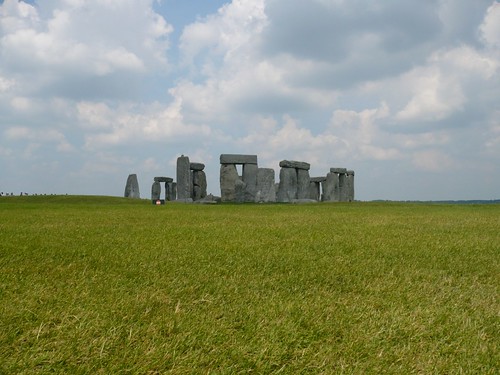
width="500" height="375" alt="Stonehenge" /></a></p><p>Stonehenge is probably one of those places that don't need much
introduction.  There has been a lot of speculation as to the meaning
and original use of the site.  Personally, I find it unlikely that we
will ever discover ultimate answers to those questions.  And perhaps
that's exactly what makes up the magic of the place and draws so many
people from all over the world to this small spot in the beautiful
Wiltshire countryside.</p><p>I visited Stonehenge on June 9th. A selection of the photos I took can
be found in this <a
href="http://www.flickr.com/photos/renewagner/sets/72157606257969485/">photoset</a>.
At some point I'll have to return at the time of sunrise or sunset.
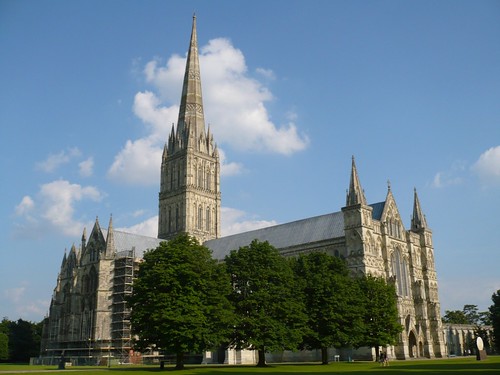
The magic of the stones only truly unfolds with the right lighting.</p><p><a
href="http://www.flickr.com/photos/renewagner/sets/72157606258015165/">Salisbury</a>,
on the other hand, is probably less well known.  And if it hadn't been
for a nice lady on the train from Cardiff to Salisbury who recommended
seeing <a
href="http://www.flickr.com/photos/renewagner/sets/72157606258111869/">Salisbury
Cathedral</a> I might actually have missed this outstanding gem of <a
href="http://en.wikipedia.org/wiki/English_Gothic_architecture">English
Gothic architecture</a>.</p><p><a href="http://www.flickr.com/photos/renewagner/2682828026/"
title="P1040361.JPG by René Wagner, on Flickr"><img
src="http://farm4.static.flickr.com/3158/2682828026_eaf3e26d94.jpg"
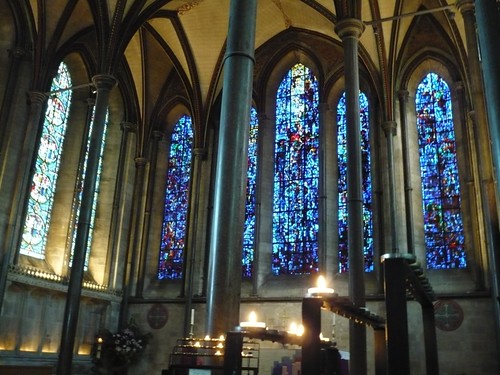
width="500" height="375" alt="P1040361.JPG" /></a></p><p>The cynic in me says &quot;Wherever I go the scaffolding is already
there&quot;, but <a
href="http://nelianur.org/2008/03/10/bath-trip">once again</a> I'll
just take that as a reason to pay another visit to Salisbury.  The
atmosphere inside Salisbury Cathedral was remarkable.  It was overall
darker than Bath Abbey, but that allowed the various light spots and
candles to work their magic.</p><p><a href="http://www.flickr.com/photos/renewagner/2681998949/"
title="P1040331.JPG by René Wagner, on Flickr"><img
src="http://farm4.static.flickr.com/3085/2681998949_cc74c58b56.jpg"
width="500" height="375" alt="P1040331.JPG" /></a></p></div></content><id>http://nelianur.org/2008/07/19/stonehenge-and-salisbury</id><link rel="alternate" href="http://nelianur.org/2008/07/19/stonehenge-and-salisbury"/><published>2008-07-19T17:54:29Z</published><title type="xhtml"><div xmlns="http://www.w3.org/1999/xhtml">Stonehenge and Salisbury</div></title><updated>2008-07-19T17:54:29Z</updated></entry><entry><category term="life"/><category term="cardiff"/><category term="erasmus"/><category term="bremen"/><category term="robotics"/><content type="xhtml"><div xmlns="http://www.w3.org/1999/xhtml"><p>A lot has happened since my last entry.  I visited Salisbury and
Stonehenge, my Erasmus stay in Cardiff officially ended, I went back
home via London on a flight that felt like magic due to the sun
setting while we were above the clouds, and last but not least I'm in
the early stages with another robotics project at my <a
href="http://www.informatik.uni-bremen.de">home university</a> in
Bremen.</p><p>Unfortunately getting the latter started didn't leave much time for
anything else, but things are looking promising now, so I'm taking a
bit of a break tagging and uploading photos and should have some
slightly more detailed blog entries ready soon.</p></div></content><id>http://nelianur.org/2008/07/19/catching-up</id><link rel="alternate" href="http://nelianur.org/2008/07/19/catching-up"/><published>2008-07-19T12:41:08Z</published><title type="xhtml"><div xmlns="http://www.w3.org/1999/xhtml">Catching Up</div></title><updated>2008-07-19T12:41:08Z</updated></entry><entry><category term="cardiff"/><category term="photos"/><category term="erasmus"/><content type="xhtml"><div xmlns="http://www.w3.org/1999/xhtml"><p><a href="http://www.flickr.com/photos/renewagner/2560949969/" title="P1030818.JPG by René Wagner, on Flickr"><img src="http://farm4.static.flickr.com/3011/2560949969_34f310a117_m.jpg" width="180" height="240" alt="P1030818.JPG" /></a></p><p>Tempus fugit. Or so they say. My Erasmus stay here in Cardiff is about
to end and, between preparing for my departure and planning all the
stuff I'll need to do once I'm back home, I'm traveling around a bit
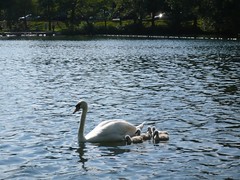
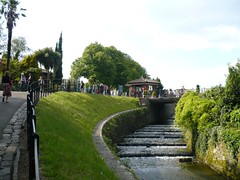
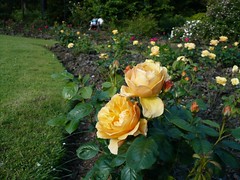
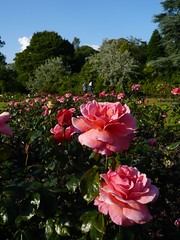
to see places I haven't been to yet.</p><p>Yesterday, I spent the afternoon in Roath Park, a Victorian style park
in the north of Cardiff featuring a large artificial lake with many
swans and all sorts of other birds, as well as botanical and rose
gardens. I found it to be a great place to relax.  Some impressions
are below, have a look at the <a
href="http://www.flickr.com/photos/renewagner/sets/72157605504090303/">complete
photo set</a> for more.</p><p><a href="http://www.flickr.com/photos/renewagner/2561719032/" title="P1030629.JPG by René Wagner, on Flickr"><img src="http://farm3.static.flickr.com/2334/2561719032_a6bd23cece_m.jpg" width="240" height="180" alt="P1030629.JPG" /></a></p><p><a href="http://www.flickr.com/photos/renewagner/2561737484/" title="P1030712.JPG by René Wagner, on Flickr"><img src="http://farm4.static.flickr.com/3093/2561737484_c694d97cb9_m.jpg" width="240" height="180" alt="P1030712.JPG" /></a></p><p><a href="http://www.flickr.com/photos/renewagner/2561738134/" title="P1030715.JPG by René Wagner, on Flickr"><img src="http://farm4.static.flickr.com/3035/2561738134_5811b3f7eb_m.jpg" width="240" height="180" alt="P1030715.JPG" /></a></p><p><a href="http://www.flickr.com/photos/renewagner/2560933171/" title="P1030757.JPG by René Wagner, on Flickr"><img src="http://farm4.static.flickr.com/3020/2560933171_833ac099d2_m.jpg" width="240" height="180" alt="P1030757.JPG" /></a></p><p><a href="http://www.flickr.com/photos/renewagner/2561762536/" title="P1030769.JPG by René Wagner, on Flickr"><img src="http://farm4.static.flickr.com/3095/2561762536_2285777f95_m.jpg" width="180" height="240" alt="P1030769.JPG" /></a></p><p><a href="http://www.flickr.com/photos/renewagner/2560911453/" title="P1030701.JPG by René Wagner, on Flickr"><img src="http://farm4.static.flickr.com/3090/2560911453_3e1e9a379c_m.jpg" width="240" height="180" alt="P1030701.JPG" /></a></p><p><a href="http://www.flickr.com/photos/renewagner/2561732230/" title="P1030685.JPG by René Wagner, on Flickr"><img src="http://farm4.static.flickr.com/3146/2561732230_6ed4f4a60a_m.jpg" width="240" height="180" alt="P1030685.JPG" /></a></p></div></content><id>http://nelianur.org/2008/06/08/an-afternoon-in-roath-park</id><link rel="alternate" href="http://nelianur.org/2008/06/08/an-afternoon-in-roath-park"/><published>2008-06-08T17:20:53Z</published><title type="xhtml"><div xmlns="http://www.w3.org/1999/xhtml">An Afternoon in Roath Park</div></title><updated>2008-06-08T17:20:53Z</updated></entry><entry><category term="cardiff"/><category term="barryisland"/><category term="photos"/><category term="erasmus"/><content type="xhtml"><div xmlns="http://www.w3.org/1999/xhtml"><p>Between this semester's second last and last exams I had almost a week
of time, so I took a Saturday afternoon off and went to <a
href="http://en.wikipedia.org/wiki/Barry_Island_%28Vale_of_Glamorgan%29">Barry
Island</a> again.  Barry Island is just a 30 minutes train ride from
Cardiff, so this is a great way of escaping the city.</p><p><a href="http://www.flickr.com/photos/renewagner/2542115537/"
title="P1030170.JPG by René Wagner, on Flickr"><img
src="http://farm3.static.flickr.com/2212/2542115537_17cd31a8e2_m.jpg"
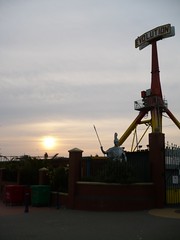
width="240" height="180" alt="P1030170.JPG" /></a></p><p>One of the main Barry Island attractions is Barry Island Pleasure Park
with all sorts of fun rides.</p><p><a href="http://www.flickr.com/photos/renewagner/2542120703/"
title="P1030192.JPG by René Wagner, on Flickr"><img
src="http://farm4.static.flickr.com/3081/2542120703_6fd1320a05_m.jpg"
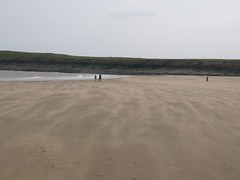
width="240" height="180" alt="P1030192.JPG" /></a></p><p>The reason why I went there, however, was the beach and the sea. It
was a rather grey and windy day, but I enjoyed it nonetheless.  Note
the sand &quot;flying&quot; over the beach.</p><p><a href="http://www.flickr.com/photos/renewagner/2542130079/"
title="P1030218.JPG by René Wagner, on Flickr"><img
src="http://farm4.static.flickr.com/3110/2542130079_b771fedca0_m.jpg"
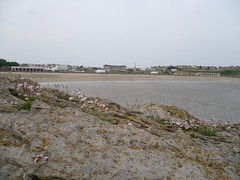
width="240" height="180" alt="P1030218.JPG" /></a></p><p>While climbing alonside the cliffs I noticed a number of tiny but
beautiful flowers that I wouldn't have expected in such a location.</p><p><a href="http://www.flickr.com/photos/renewagner/2542964498/"
title="P1030260.JPG by René Wagner, on Flickr"><img
src="http://farm3.static.flickr.com/2417/2542964498_82400ba5a9_m.jpg"
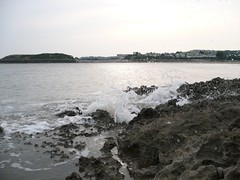
width="240" height="180" alt="P1030260.JPG" /></a></p><p>Watching the waves crash onto the rocks had a very relaxing and
refreshing effect.  Refreshing in more than one way... I got slightly
wet right after the following shot.</p><p><a href="http://www.flickr.com/photos/renewagner/2542970056/"
title="P1030300.JPG by René Wagner, on Flickr"><img
src="http://farm4.static.flickr.com/3171/2542970056_2ae852684f_m.jpg"
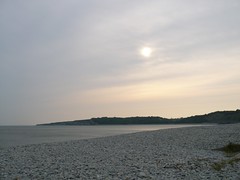
width="240" height="180" alt="P1030300.JPG" /></a></p><p>I then went on to the pebbles beach of Cold Knap.  I don't know
whether these pebbles occur there naturally, but it gave the place an
interesting atmosphere.  Unfortunaly, the photos don't do the
brilliant light justice...</p><p><a href="http://www.flickr.com/photos/renewagner/2542974718/"
title="P1030337.JPG by René Wagner, on Flickr"><img
src="http://farm4.static.flickr.com/3035/2542974718_c4135b6ab4_m.jpg"
width="240" height="180" alt="P1030337.JPG" /></a></p><p>I had originally planned to stay there and wait for the sunset, but
the high tide had blocked the way I got there (along the beach).  Not
knowing how long it would take me to find an alternative route I
decided to go back early.  I still saw the sun approach the horizon
over Barry Island Pleasure Park</p><p><a href="http://www.flickr.com/photos/renewagner/2542980244/"
title="P1030386.JPG by René Wagner, on Flickr"><img
src="http://farm4.static.flickr.com/3237/2542980244_4d248e0e4a_m.jpg"
width="180" height="240" alt="P1030386.JPG" /></a></p><p>and the actual sunset later over Barry which marked the end of a
wonderful day.</p><p><a href="http://www.flickr.com/photos/renewagner/2542156513/"
title="P1030403.JPG by René Wagner, on Flickr"><img
src="http://farm3.static.flickr.com/2417/2542156513_35f429747e_m.jpg"
width="240" height="180" alt="P1030403.JPG" /></a></p></div></content><id>http://nelianur.org/2008/06/01/taking-a-deep-breath</id><link rel="alternate" href="http://nelianur.org/2008/06/01/taking-a-deep-breath"/><published>2008-06-01T22:50:14Z</published><title type="xhtml"><div xmlns="http://www.w3.org/1999/xhtml">Taking a Deep Breath</div></title><updated>2008-06-01T22:50:14Z</updated></entry><entry><category term="cardiff"/><category term="london"/><category term="photos"/><category term="erasmus"/><content type="xhtml"><div xmlns="http://www.w3.org/1999/xhtml"><p><a href="http://www.flickr.com/photos/renewagner/2421682904/"
title="P1020996.JPG by Ren&#233; Wagner, on Flickr"><img
src="http://farm3.static.flickr.com/2381/2421682904_0cab6811d4_m.jpg"
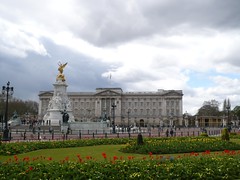
width="180" height="240" alt="P1020996.JPG" /></a></p><p>I arrived back in Cardiff for the final stint of my Erasmus stay at
Cardiff University last weekend.  The journey was uneventful and I
even had a bit of time in London for another brief visit to <a
href="http://www.flickr.com/photos/renewagner/sets/72157604584935228/">Buckingham
Palace</a>.  If you are wondering about the barriers in some of the
photos, those were for the London Marathon which took place the
following day.</p><p><a href="http://www.flickr.com/photos/renewagner/2421149050/"
title="P1020850.JPG by Ren&#233; Wagner, on Flickr"><img
src="http://farm4.static.flickr.com/3177/2421149050_6aba86d9e7_m.jpg"
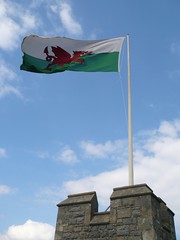
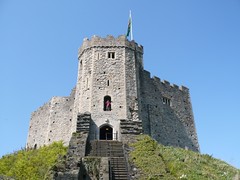
width="240" height="180" alt="P1020850.JPG" /></a></p><p>I also managed to make it inside <a
href="http://www.flickr.com/photos/renewagner/sets/72157604589348258/">Cardiff
Castle</a> this week! It only took me some 7 months ;) Personally, I
liked the Norman Keep best (see the photo below), but the castle is
also interesting if you're into gold covered rooms and all sorts of
other luxuries.</p><p><a href="http://www.flickr.com/photos/renewagner/2420855427/"
title="P1020907.JPG by Ren&#233; Wagner, on Flickr"><img
src="http://farm3.static.flickr.com/2276/2420855427_3c625a6137_m.jpg"
width="240" height="180" alt="P1020907.JPG" /></a></p></div></content><id>http://nelianur.org/2008/04/19/back-in-cardiff</id><link rel="alternate" href="http://nelianur.org/2008/04/19/back-in-cardiff"/><published>2008-04-19T19:30:39Z</published><title type="xhtml"><div xmlns="http://www.w3.org/1999/xhtml">Back in Cardiff</div></title><updated>2008-04-19T19:30:39Z</updated></entry><entry><category term="london"/><category term="photos"/><category term="erasmus"/><content type="xhtml"><div xmlns="http://www.w3.org/1999/xhtml"><p><a href="http://www.flickr.com/photos/renewagner/sets/72157604231947410/"
title="London in March by Ren&#233; Wagner, on Flickr"><img
src="http://farm3.static.flickr.com/2194/2359481106_5b7297310b_m.jpg" width="240" height="180" alt="P1020732.JPG" /></a></p><p>Back in December <a href="http://cardifferasmus.co.uk/">we</a> spent a
<a
href="http://www.flickr.com/photos/renewagner/sets/72157603371628586/">weekend
in London</a>.  On my way home from Cardiff last Saturday, I took the
chance to visit central London again.  In only about 2.5 hours, I
managed to see <a
href="http://www.flickr.com/photos/renewagner/2358679543/in/set-72157604231947410/">Victoria
Train Station</a>, the <a
href="http://www.flickr.com/photos/renewagner/2358675613/in/set-72157604231947410/">Royal
Mews</a>, <a
href="http://www.flickr.com/photos/renewagner/2358666865/in/set-72157604231947410/">Buckingham
Palace</a>, the <a
href="http://www.flickr.com/photos/renewagner/2358667757/in/set-72157604231947410/">Victoria
Memorial</a>, the gate to <a
href="http://www.flickr.com/photos/renewagner/2359502846/in/set-72157604231947410/">Green
Park</a>, parts of <a
href="http://www.flickr.com/photos/renewagner/2358657411/in/set-72157604231947410/">St. James's
Park</a>, Parliament Square with <a
href="http://www.flickr.com/photos/renewagner/2359477740/in/set-72157604231947410/">its</a>
<a
href="http://www.flickr.com/photos/renewagner/2358637545/in/set-72157604231947410/">statues</a>,
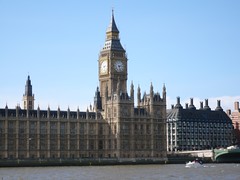
<a
href="http://www.flickr.com/photos/renewagner/2359476630/in/set-72157604231947410/">Big
Ben and Westminster Palace (Houses of Parliament)</a> from Parliament
Square and from the south bank of the River Thames, the <a
href="http://www.flickr.com/photos/renewagner/2358645359/in/set-72157604231947410/">London
Eye</a>, <a
href="http://www.flickr.com/photos/renewagner/2359474336/in/set-72157604231947410/">St. Margaret's
Church</a>, and <a
href="http://www.flickr.com/photos/renewagner/2358633435/in/set-72157604231947410/">Westminster
Abbey</a>.  The weather was somewhat mixed with high winds, rain,
snow, and sunshine.  The best part of the trip was clearly the walk
along the south bank of the River Thames in the sun.</p><p>I will definitely be back, with a tripod, a wide angle lens and more
time at hand.  In particular I'd like to take more <a
href="http://www.flickr.com/photos/renewagner/2084611921/">night
shots</a> and go inside Westminster Abbey.</p></div></content><id>http://nelianur.org/2008/03/24/london-in-march</id><link rel="alternate" href="http://nelianur.org/2008/03/24/london-in-march"/><published>2008-03-24T23:19:24Z</published><title type="xhtml"><div xmlns="http://www.w3.org/1999/xhtml">London in March</div></title><updated>2008-03-24T23:19:24Z</updated></entry><entry><category term="emacs"/><category term="linux"/><category term="boot time"/><category term="noatime"/><category term="efficiency"/><content type="xhtml"><div xmlns="http://www.w3.org/1999/xhtml"><p><a href="http://www.flickr.com/photos/renewagner/2359519264/"
title="P1020594.JPG by René Wagner, on Flickr"><img
src="http://farm3.static.flickr.com/2030/2359519264_b37ccb1141_m.jpg"
width="180" height="240" alt="P1020594.JPG" /></a></p><p>You probably know the feeling when software you use daily gets in your
way rather than assisting you.  To me Emacs has been such an offender
for a long time - in that it creates backup and
<code>semantic.cache</code> files in every directory you edit files
in.  Obviously, this makes it often impossible to find the file you
are looking for in a directory listing.</p><p>Last week I had enough and searched for a solution.  I found one to
the backup files problem in <a
href="http://xahlee.org/emacs/emacs_adv_tips.html">Xah Lee's Advanced
Emacs Tips</a> and got rid of <code>semantic.cache</code> by following
a suggestion in the <a
href="http://ecb.sourceforge.net/docs/FAQ.html">ECB FAQ</a> to set
<code>semanticdb-default-save-directory</code>.  In both cases the
functionality in question is not disabled, but the corresponding files
are created in a directory somewhere in <code>~/.emacs.d/</code> which
makes me a happy Emacs user again.</p><p>Another huge annoyance is the long time it takes current Linux
distributions to boot. I remember how my old 350MHz Pentium II with
its by today's standards dead slow harddisks booted in about 20
seconds from the Lilo prompt to the KDM/GDM login screen.  Out of the
box the Debian installation on my 2.4GHz Core 2 Duo workstation with
its 7200RPM disks needs about twice as much time to get me to a
graphical (GDM) login.  After getting rid of a bunch of unnecessary
init scripts I got that figure down to slightly less than 30 seconds.
So, it's definitely worth the effort to review what init scripts are
run and whether you really need them.  I still don't find the result
very satisfactory though.</p><p>Last but not least I'd like to recommend the tips over at <a
href="http://www.lesswatts.org/">lesswatts.org</a>.  Even if you don't
have a recent enough kernel and userspace to benefit from
<code>CONFIG_NO_HZ</code> etc. it's worth going through their <a
href="http://www.lesswatts.org/tips/">Tips &amp; Tricks</a> section
and looking for potential power savings.  Personally, I found the
suggestion to mount filesystems with the <a
href="http://www.lesswatts.org/tips/disks.php"><code>noatime</code></a>
option enabled very useful, not necessarily because it saves power,
but because it significantly speeds up things like <code>apt-cache
search</code>, access to the <code>dpkg</code> database, and loading
all the <code>.desktop</code> files.</p></div></content><id>http://nelianur.org/2008/03/24/random-efficiency-tips</id><link rel="alternate" href="http://nelianur.org/2008/03/24/random-efficiency-tips"/><published>2008-03-24T22:31:15Z</published><title type="xhtml"><div xmlns="http://www.w3.org/1999/xhtml">Random Efficiency Tips</div></title><updated>2008-03-24T22:31:15Z</updated></entry><entry><category term="bath"/><category term="erasmus"/><category term="photos"/><content type="xhtml"><div xmlns="http://www.w3.org/1999/xhtml"><p><a href="http://www.flickr.com/photos/renewagner/sets/72157604072767016/"
title="Bath Photoset by René Wagner, on Flickr">
<img src="http://farm3.static.flickr.com/2255/2320165012_c4a0ca616c_m.jpg"
width="180" height="240" alt="P1020305.JPG" /></a></p><p><a href="http://www.cardifferasmus.co.uk/">We</a> visited <a
href="http://en.wikipedia.org/wiki/Bath%2C_Somerset">Bath</a> on March
1st. It was a really beautiful day with lots of sunshine and therefore
many opportunities to take pictures. The brilliant light created a
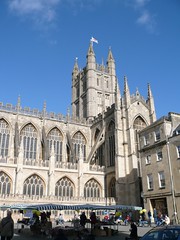
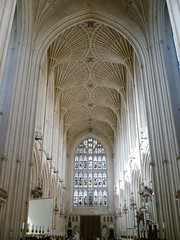
very special atmosphere inside <a
href="http://en.wikipedia.org/wiki/Bath_Abbey">Bath Abbey</a> which is
hard to capture, but the photo below may give you a rough idea of it.
If you get a chance, Bath Abbey is a must visit and I recommend you
allow plenty of time to really enjoy the experience - there is so much
to discover inside.</p><p><a href="http://www.flickr.com/photos/renewagner/2320180590/" title="P1020256.JPG by René Wagner, on Flickr"><img src="http://farm3.static.flickr.com/2146/2320180590_e3462249aa_m.jpg" width="180" height="240" alt="P1020256.JPG" /></a></p><p>The <a
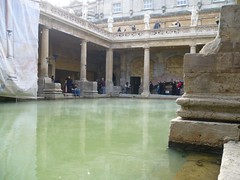
href="http://en.wikipedia.org/wiki/Roman_Baths_%28Bath%29">Roman
Baths</a> were somewhat disappointing. From an archeological point of
view the presentation of the historic site had a rather unprofessional
feel to it - many interesting bits were not explained at all or only
via an electronic &quot;audio guide&quot; which I found extremely
tiresome to listen to. The <a
href="http://en.wikipedia.org/wiki/Hypocaust">Hypocaust</a>
(underfloor heating system) is probably among the most noteworthy of
ancient Roman engineering feats, yet I couldn't find any diagram
explaining how it worked or even a mention of it in the &quot;audio
guide&quot;. It was certainly fun to see <a
href="http://www.flickr.com/photos/renewagner/2319321915/"
title="Pilae Stacks by René Wagner, on Flickr">pilae stacks</a> (part
of a Hypocaust) live, but only because I knew what I was looking at -
people around me gave me a rather funny look wondering why I was so
excited over a couple of bricks until I explained it all.</p><p><a href="http://www.flickr.com/photos/renewagner/2320134806/"
title="P1020492.JPG by René Wagner, on Flickr"><img
src="http://farm3.static.flickr.com/2340/2320134806_4f3eccb66b_m.jpg"
width="240" height="180" alt="P1020492.JPG" /></a></p><p>From a photographer's point of view, the scaffolding that was
basically everywhere was a bit of a show stopper (as can be seen
above). Given the hefty admission fee, I believe a warning notice at
the entrance would have been the least the museum should have done. On
the flip side, it makes for a good reason to visit Bath again and
re-do the affected shots.</p><p><a href="http://www.flickr.com/photos/renewagner/2320132832/" title="P1020517.JPG by René Wagner, on Flickr"><img src="http://farm3.static.flickr.com/2200/2320132832_db739df128_m.jpg" width="240" height="180" alt="P1020517.JPG" /></a></p><p>Just in time before the weather changed (for the worse) we also
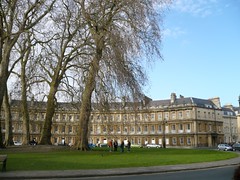
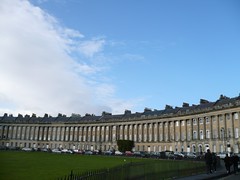
managed to pay shorts visits to <a
href="http://en.wikipedia.org/wiki/The_Circus_%28Bath%29">The
Circus</a> (pictured above) and the <a
href="http://en.wikipedia.org/wiki/Royal_Crescent">Royal
Crescent</a> (below). I particularly liked the <a
href="http://www.flickr.com/photos/renewagner/2319320289/in/set-72157604072767016/">trees</a>
in the middle of The Circus.</p><p><a href="http://www.flickr.com/photos/renewagner/2320127438/" title="P1020555.JPG by René Wagner, on Flickr"><img src="http://farm4.static.flickr.com/3088/2320127438_e41e02c99d_m.jpg" width="240" height="180" alt="P1020555.JPG" /></a></p><p>And finally, I love seagulls.</p><p><a href="http://www.flickr.com/photos/renewagner/2319345571/"
title="P1020337.JPG by René Wagner, on Flickr"><img
src="http://farm3.static.flickr.com/2119/2319345571_3179a018fc_m.jpg"
width="240" height="180" alt="P1020337.JPG" /></a></p></div></content><id>http://nelianur.org/2008/03/10/bath-trip</id><link rel="alternate" href="http://nelianur.org/2008/03/10/bath-trip"/><published>2008-03-10T22:49:51Z</published><title type="xhtml"><div xmlns="http://www.w3.org/1999/xhtml">Bath Trip</div></title><updated>2008-03-10T22:49:51Z</updated></entry><entry><category term="blog"/><content type="xhtml"><div xmlns="http://www.w3.org/1999/xhtml"><p><a href="http://www.flickr.com/photos/renewagner/2319252247/"
title="P1020576.JPG by Ren&#233; Wagner, on Flickr">
<img src="http://farm4.static.flickr.com/3247/2319252247_3d7bb9e0a8_m.jpg" width="240" height="180" alt="P1020576.JPG" /></a></p><p>My little blog engine/compiler is approaching feature completeness and I think
what it generates is ready for public consumption, so I've switched the front page of
<a href="http://nelianur.org">nelianur.org</a> over to it now.
There is no non-blog content yet, but that is going to change over the course
of the next few weeks.</p><p>Enjoy!</p></div></content><id>http://nelianur.org/2008/03/09/going-live</id><link rel="alternate" href="http://nelianur.org/2008/03/09/going-live"/><published>2008-03-09T19:19:45Z</published><title type="xhtml"><div xmlns="http://www.w3.org/1999/xhtml">Going Live</div></title><updated>2008-03-09T19:19:45Z</updated></entry><entry><category term="blog"/><content type="xhtml"><div xmlns="http://www.w3.org/1999/xhtml"><p>Since my last post, I've added code to generate an 
<a href="http://nelianur.org/blog/atom.xml">Atom feed</a> using 
<a href="http://mult.ifario.us/">Paul R. Brown's</a> excellent Atom Haskell 
library. Now go and subscribe to it!</p><p>I've also switched the CSS to that from <a href="http://getk2.com/">K2</a> and added
a header image based on a <a href="http://www.flickr.com/photos/renewagner/2239967224">photo</a>
I took on a trip to Barry Island a few weeks ago. I love watching waves 
crash onto the beach, so I guess it fits well.</p><p>Finally, I've imported old posts from Advogato and my blog on the university
webserver (which I had almost forgotten about). The latter will soon be removed
because I don't want to keep maintaining the pyblosxom installation behind it.
Importing the Advogato posts was rather painful, as they were missing all
the closing HTML tags although I'm sure I entered them. <code>tidy</code> fixed
up most issues but I still had to correct some stuff manually.</p></div></content><id>http://nelianur.org/2008/02/29/atom-feed-new-design-and-old-posts</id><link rel="alternate" href="http://nelianur.org/2008/02/29/atom-feed-new-design-and-old-posts"/><published>2008-02-29T20:35:50Z</published><title type="xhtml"><div xmlns="http://www.w3.org/1999/xhtml">Atom Feed, New Design, and Old Posts</div></title><updated>2008-02-29T20:35:50Z</updated></entry><entry><category term="blog"/><content type="xhtml"><div xmlns="http://www.w3.org/1999/xhtml"><p>The blog engine now has a simple editor interface that opens an editor,
allows the user to enter a post, and then stores it.</p></div></content><id>http://nelianur.org/2008/02/16/editor-interface</id><link rel="alternate" href="http://nelianur.org/2008/02/16/editor-interface"/><published>2008-02-16T23:23:22Z</published><title type="xhtml"><div xmlns="http://www.w3.org/1999/xhtml">Editor Interface</div></title><updated>2008-02-16T23:23:22Z</updated></entry><entry><category term="blog"/><content type="xhtml"><div xmlns="http://www.w3.org/1999/xhtml"><p>The engine now reads and shows date information and supports multiple posts.</p></div></content><id>http://nelianur.org/2008/02/10/date-information-and-multiple-posts</id><link rel="alternate" href="http://nelianur.org/2008/02/10/date-information-and-multiple-posts"/><published>2008-02-10T00:15:06Z</published><title type="xhtml"><div xmlns="http://www.w3.org/1999/xhtml">Date Information and Multiple Posts</div></title><updated>2008-02-10T00:15:06Z</updated></entry><entry><category term="web"/><category term="blog"/><content type="xhtml"><div xmlns="http://www.w3.org/1999/xhtml"><p>I've been meaning to set up my own blog for a long time, but it never
happened until now. The reason is simple: all popular blog engines are
inherently insecure. Take WordPress as an example of one in which
major flaws are found almost on a weekly basis.</p><p>The solution is of course obvious: create static content and store it
as xhtml on regular web space. Unfortunately, there aren't many tools
around that do that sort of thing and none of them satisfied my
expectations.</p><p>Consequently, I've written my own static blog engine in <a
href="http://haskell.org">Haskell</a> which generated this very page
you're reading right now. It's still rather basic but will be extended
as I get around to implementing missing functionality.</p></div></content><id>http://nelianur.org/2008/02/09/the-last-outpost-of-the-static-web</id><link rel="alternate" href="http://nelianur.org/2008/02/09/the-last-outpost-of-the-static-web"/><published>2008-02-09T00:41:20Z</published><title type="xhtml"><div xmlns="http://www.w3.org/1999/xhtml">The Last Outpost of the Static Web</div></title><updated>2008-02-09T00:41:20Z</updated></entry><entry><category term="linux"/><category term="kernel"/><category term="book"/><content type="xhtml"><div xmlns="http://www.w3.org/1999/xhtml"><p>When someone pointed me to Greg K-H's book <a
href="http://www.kroah.com/lkn/">Linux Kernel in a Nutshell</a> my
initial reaction was: Building a kernel isn't exactly rocket
science. Why would I want to read a book about it?</p><p>Well, it seems I was wrong. I skimmed through the PDF version today
and noticed a very useful feature of <strong>make menuconfig</strong>:
Hit / and it allows you to search the CONFIG_ strings.</p></div></content><id>http://nelianur.org/2007/11/27/linux-kernel-in-a-nutshell</id><link rel="alternate" href="http://nelianur.org/2007/11/27/linux-kernel-in-a-nutshell"/><published>2007-11-27T11:32:00Z</published><title type="xhtml"><div xmlns="http://www.w3.org/1999/xhtml">Linux Kernel in a Nutshell</div></title><updated>2007-11-27T11:32:00Z</updated></entry><entry><category term="functional programming"/><category term="lisp"/><category term="robotics"/><category term="haskell"/><content type="xhtml"><div xmlns="http://www.w3.org/1999/xhtml"><p>I've been looking into LISP recently (initially for university stuff).
Historically, I think it played an outstanding role in the development
of computing. Bringing functional programming to a world of assembler
and low-level C hacking is clearly an achievement in its own right. I
am particularly impressed learning that LISP <a
href="http://www.flownet.com/gat/jpl-lisp.html">was used to control
some NASA spacecraft</a> - today most people don't even use anything
higher level than C or perhaps C++ on robotic systems, and that's on
much more powerful and significantly more accessible hardware (try
attaching a JTAG interface to a probe on another planet to debug a
problem with your code).</p><p>From a language design point of view I'm not overly impressed by
(Common) LISP though. Some of the criticism I have for it is arguably
purely a question of taste: I find the lack of mixfix operators rather
annoying, but of course it makes parsing by orders of magnitude
easier. More of a problem is the apparent lack of strong typing -
e.g. LISP will happily allow you to have elements of differents types
in a list, among other more serious issues. It also appears to be
possible to change semantics based on input types of a function. The
fact that functions (like +) can take a variable number of arguments
is a bit of a nail in the coffin from my point of view. I'll keep
using Haskell for real world functional programming.</p></div></content><id>http://nelianur.org/2007/11/27/lisp</id><link rel="alternate" href="http://nelianur.org/2007/11/27/lisp"/><published>2007-11-27T11:32:00Z</published><title type="xhtml"><div xmlns="http://www.w3.org/1999/xhtml">LISP</div></title><updated>2007-11-27T11:32:00Z</updated></entry><entry><category term="haskell"/><category term="ghc"/><category term="arm"/><category term="eabi"/><category term="debian"/><content type="xhtml"><div xmlns="http://www.w3.org/1999/xhtml"><p>A while back <a
href="http://nchip.livejournal.com/">Riku Voipio</a> called
for <a
href="http://lists.debian.org/debian-arm/2007/11/msg00001.html">help
with missing bits for Debian/armel</a> one of which was GHC.
Not knowing Martin Guy was already (privately) working on
bootstrapping GHC (an ARM port existed already) I decided to
have a go at it. The GHC porting documentation is clearly
excellent and resulted in <a
href="http://lists.debian.org/debian-arm/2007/11/msg00038.html">quick
success</a> (relatively quick given the slow build
hardware). At that time Martin was already far ahead of me.
Meanwhile he has <a
href="http://lists.debian.org/debian-arm/2007/11/msg00052.html">made
packages available</a>. I have yet to get around to
reporting some minor problems GHC upstream and I may also
investigate why ghci doesn't work at some point, but
basically this means Haskell is available to the EABI crowd
:)</p></div></content><id>http://nelianur.org/2007/11/27/ghc-on-debian-armel-arm-eabi</id><link rel="alternate" href="http://nelianur.org/2007/11/27/ghc-on-debian-armel-arm-eabi"/><published>2007-11-27T11:32:00Z</published><title type="xhtml"><div xmlns="http://www.w3.org/1999/xhtml">GHC on Debian/armel (ARM EABI)</div></title><updated>2007-11-27T11:32:00Z</updated></entry><entry><category term="google"/><category term="android"/><category term="java"/><category term="embedded"/><content type="xhtml"><div xmlns="http://www.w3.org/1999/xhtml"><p>I'm a bit late with my obligatory Android post. Partly that's
because I wrote this in a lab at university a while back and forgot
to post it.</p><p>The announcement of Android and the release of the "early look"
SDK have created quite a bit of hype. There have been numerous
similar announcements by other initiatives to get Linux on mobile
devices, so what's with the excitement about Android?</p><p>Of course, it's backed by Google. Whether you like it or not
there isn't going to be a way around it. But that's not all there
is to it. The engineers behind Android have simply done an
excellent job judging from the SDK. And there's a lesson or two to
be learned by the open source world:</p><p><ul>
<li>
<p><em>The Linux kernel is good at what it does. Userspace is
generally not worth bothering with.</em></p>
<p>I found this very striking. If you have a look at <a href=
"http://benno.id.au/blog/2007/11/13/android-under-the-hood">what's
running</a> in the emulator (which is based on Qemu), you'll notice
that there are just a few processes and the only standard component
among them is dbus.</p>
<p>Android uses a custom (launchd/upstart-like) init replacement.
Traditional, SysV style, init systems waste a lot of time just
forking shell processes. And doing stuff in shell also opens the
door for monstrous shell scripts that spend ages performing simple
tasks such as <a href=
"http://www.openembedded.org/repo/org.openembedded.dev/packages/initscripts/initscripts-1.0/populate-volatile.sh">
creating a few files and directories</a> (that script takes 5-10
seconds to run). It still takes a while for Android to boot though,
which I hope is just because my laptop is slow.</p>
<p>Android also doesn't bother with providing a complete Unix
commandline environment, since, hey, the user isn't going to see
that anyway. It's funny how it's never occured to me to stop
shipping the lower layers (non-essential bits of busybox, login).
But then again, I'd probably have been yelled at for that by some
users...</p>
<p>I have yet to check whether udev or a udev replacement is
involved as that tends to be a bit of a bottle neck on resource
constrained devices. It would certainly be nice to either get
things to work without udev or with a more efficient replacement.
The other thing I have yet to figure out is whether any type of X
is involved in windowing. At a glance, it doesn't look like it
though.</p>
</li>
<li>
<p><em>You can build efficient security models that are still
simple enough for people to actually use them.</em></p>
<p>Most PDA/phone stacks make the assumption that only one user
uses the system. Personally, I prefer multi-user environments so I
can lend devices to friends/family, but for the average user that
assumption is reasonable.</p>
<p>In a multi-user environment you need technologies like SELinux
to separate individual applications run on behalf of a single user.
Mobile stacks have to my knowledge (apart from an extremely locked
down set of Motorola phones) up to now never bothered with that.
Applications either all run as (yuck!) root (Qt/Embedded, Qtopia)
or as a single user (GPE, Maemo, Poky, OpenMoko) without any
significant restrictions as to what individual applications are
allowed to do.</p>
<p>Enter Android... Why not re-use the space freed by the
single-user assumption and run each application as a separate user?
Sufficient for most use cases and still very simple to understand.
Security models only matter if they are simple because they won't
be used otherwise. It remains to be seen how well the Android
security model works out in practice but I like the concept.</p>
</li>
<li>
<p><em>It's not a platform unless it comes with a comprehensive API
and an easy to use, well-integrated SDK.</em></p>
<p>I found it rather amusing how people referred to OpenMoko as the
first open platform in reaction to the Android SDK release. At
present OpenMoko is a prototype device plus a number of mockups and
a few prototype applications. There's a long way to go to turn that
into a platform.</p>
<p>First of all, developers will want a comprehensive API. From
experience talking fellow developers through GLib/GObject/Gtk+/etc.
development basics, it's fairly obvious to me that just throwing a
bunch of libraries at people doesn't do the trick. People get lost
too easily around the borders between the territory covered by the
different libraries involved. Arguably, this is mainly a
documentation problem, but there's more to it. Following the
development of the Gnome desktop throughout the years shows that
people spend a lot of time discussing at which level to implement
functionality, shuffling bits around, etc.</p>
<p>Android takes a different approach. Using the Java programming
language allows integration with Eclipse (or similar commercial
IDEs) which provides developers with API documentation right in the
editor. Combine that with refactoring/reenginering features of
modern Java IDEs and you'll never look back to anything else.</p>
<p>And the level of integration goes beyond that. You don't even
have to leave Eclipse to upload your application to the devices.
It's all just a matter of clicking a few buttons. For an "early
look" SDK that's rather polished and provides a new level of
efficiency compared to what I'm used to on other Linux based
systems.</p>
</li>
<li>
<p><em>The primary goal must be to attract developers. The larger
the set of potential developers the better.</em></p>
<p>If you want people to use your stuff you'll have to make it easy
for them to hop on the train. As simple as that may sound, most of
the time it just doesn't work like that.</p>
<p>I believe the choice of Java as the programming language was the
right one. Personal taste aside, there is hardly any way around
Java. It's the de-facto standard first language in teaching around
the world.</p>
<p>It remains to be seen whether there will be other language
bindings in the future. It doesn't seem very likely to me though,
since Google probably wants to avoid a mix of languages which
easily leads to a giant mess.</p>
</li>
<li>
<p><em>Avoid cross compilation and complex build systems.</em></p>
<p>People tend to spend a lot of time setting up a cross toolchain,
fighting applications that won't cross compile cleanly, etc. That's
a major waste of time.</p>
<p>Of course there are various meta-level build systems, which try
to hide that sort of thing from you. But that comes at the price of
another level of indirection and complexity. There are very few
people who actually understand how, say, OpenEmbedded works under
the hood in every detail - the problem being that in certain cases
you need that level of understanding to get your work done.</p>
<p>Android's take on this is to avoid cross compilation and build
systems altogether (for application development anyway). I like the
approach. It's very refreshing to find a development environment
that you can instantly work with after downloading. My first simple
application ran in the emulator within minutes.</p>
</li>
</ul></p><p>People have raised the question whether Android renders various
other projects obsolete. And, realistically, I think it will once
fully open source under a permissive license. The impact will be
dramatic. As outlined above, traditional handheld distribution
paradigms along the lines of a "base system" are shown to be
irrelevant and there's been a clear focus on creating a fun
developer and user experience.</p><p>Do I sound overly optimistic for the success of Android?
Perhaps. I haven't held a device running Android in my hands yet
after all and there are <a href=
"http://robilad.livejournal.com/22312.html">licensing</a> <a href=
"http://robilad.livejournal.com/23498.html">questions</a> to be
sorted out, too. Given the list of consortium members behind the
Open Handset Alliance, however, I'm confident there's some
exciting, well engineered stuff ahead.</p></div></content><id>http://nelianur.org/2007/11/23/android</id><link rel="alternate" href="http://nelianur.org/2007/11/23/android"/><published>2007-11-23T15:58:00Z</published><title type="xhtml"><div xmlns="http://www.w3.org/1999/xhtml">Android</div></title><updated>2007-11-23T15:58:00Z</updated></entry><entry><category term="photos"/><category term="cardiff"/><category term="erasmus"/><content type="xhtml"><div xmlns="http://www.w3.org/1999/xhtml"><p><div align="center"><a
href="http://www.flickr.com/photos/renewagner/1905828257/"
title="Cardiff Bay"><img
src="http://farm3.static.flickr.com/2204/1905828257_1b3272f016_m.jpg"
width="240" height="180" alt="Cardiff Bay" border="0" /></a><br
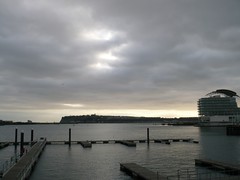
/><i>Cardiff Bay on a cloudy day</i></div></p></div></content><id>http://nelianur.org/2007/11/11/there-is-still-hope</id><link rel="alternate" href="http://nelianur.org/2007/11/11/there-is-still-hope"/><published>2007-11-11T00:27:00Z</published><title type="xhtml"><div xmlns="http://www.w3.org/1999/xhtml">There Is Still Hope</div></title><updated>2007-11-11T00:27:00Z</updated></entry><entry><category term="photos"/><category term="cardiff"/><category term="erasmus"/><content type="xhtml"><div xmlns="http://www.w3.org/1999/xhtml"><p><div align="center"><a
href="http://www.flickr.com/photos/renewagner/1849229766/"
title="Fireworks"><img
src="http://farm3.static.flickr.com/2084/1849229766_3293e4f943_m.jpg"
width="240" height="180" alt="Fireworks" border="0" /></a></div></p><p><div align="center"><a href="http://www.flickr.com/photos/renewagner/1849174020/"
title="Bonfire"><img
src="http://farm3.static.flickr.com/2371/1849174020_d19041f02c_m.jpg"
width="180" height="240" alt="Bonfire" border="0" /></a></div></p></div></content><id>http://nelianur.org/2007/11/04/bonfire-night</id><link rel="alternate" href="http://nelianur.org/2007/11/04/bonfire-night"/><published>2007-11-04T00:20:00Z</published><title type="xhtml"><div xmlns="http://www.w3.org/1999/xhtml">Bonfire Night</div></title><updated>2007-11-04T00:20:00Z</updated></entry><entry><category term="photos"/><category term="cardiff"/><category term="erasmus"/><content type="xhtml"><div xmlns="http://www.w3.org/1999/xhtml"><p><div align="center"><a
href="http://www.flickr.com/photos/renewagner/1795591078/"><img
src="http://farm3.static.flickr.com/2377/1795591078_a665476bac_m.jpg"
alt="Tempus Fugit" border="0" /></a></div></p></div></content><id>http://nelianur.org/2007/10/28/tempus-fugit</id><link rel="alternate" href="http://nelianur.org/2007/10/28/tempus-fugit"/><published>2007-10-28T23:16:00Z</published><title type="xhtml"><div xmlns="http://www.w3.org/1999/xhtml">Tempus Fugit</div></title><updated>2007-10-28T23:16:00Z</updated></entry><entry><category term="photos"/><category term="cardiff"/><category term="erasmus"/><content type="xhtml"><div xmlns="http://www.w3.org/1999/xhtml"><p><div align="center"><a
href="http://www.flickr.com/photos/renewagner/1660434512/"
rel="nofollow"><img
src="http://farm3.static.flickr.com/2058/1660434512_d0dc2d3454_m.jpg"
alt="Sunset in Cardiff" border="0" /></a></div></p></div></content><id>http://nelianur.org/2007/10/20/a-brief-moment-of-magic</id><link rel="alternate" href="http://nelianur.org/2007/10/20/a-brief-moment-of-magic"/><published>2007-10-20T22:39:00Z</published><title type="xhtml"><div xmlns="http://www.w3.org/1999/xhtml">A Brief Moment of Magic</div></title><updated>2007-10-20T22:39:00Z</updated></entry><entry><category term="university"/><category term="erasmus"/><category term="cardiff"/><category term="photos"/><content type="xhtml"><div xmlns="http://www.w3.org/1999/xhtml"><p><div align="center"><a
href="http://www.flickr.com/photos/renewagner/1484213461/"><img
src="http://farm2.static.flickr.com/1264/1484213461_14177c7642_m.jpg"
alt="Cardiff University Main Building" border="0" /></a></div></p><p>I've kept this very low profile for a long time as it wasn't clear
whether things would work out as planned until the very last
minute. But now it's official: I'm in Cardiff where I will be
studying at <a href="http://www.cf.ac.uk">Cardiff University</a> for
the next two semesters as part of the <a
href="http://en.wikipedia.org/wiki/ERASMUS_programme">Erasmus
Programme</a>.</p></div></content><id>http://nelianur.org/2007/10/04/and-so-it-has-begun</id><link rel="alternate" href="http://nelianur.org/2007/10/04/and-so-it-has-begun"/><published>2007-10-04T20:56:00Z</published><title type="xhtml"><div xmlns="http://www.w3.org/1999/xhtml">And So It Has Begun</div></title><updated>2007-10-04T20:56:00Z</updated></entry><entry><category term="robotics"/><category term="robocup"/><category term="standard platform league"/><category term="aldebaran"/><category term="nao"/><content type="xhtml"><div xmlns="http://www.w3.org/1999/xhtml"><p>I noticed today that the Four-Legged-League has been renamed to <a
href="https://www.tzi.de/4legged/bin/view/Website/WebHome">Standard
Platform League</a> and will be using a new humanoid robot at future
competitions. There isn't a whole lot information available about the
<a href="http://www.aldebaran-robotics.com/eng/index.php">Aldebaran
Nao</a> but it definitely makes me wish I was starting with my 2 year
project now (rather than being almost finished) so I could join <a
href="http://www.b-human.de">the local team</a>.</p><p>Why is a standard humanoid platform so exciting? If you've ever worked
with robotics hardware and prototypes in particular, you'll know only
too well that you rarely get to do the stuff you want to. There's
always one hardware component or another that fails on you, not to
speak of the usual pain of (systematically) incorrect sensor
readings. A standard platform makes sure that everyone has the same
starting point and (ideally) allows people to concentrate on
algorithmic work rather than developing and fixing hardware.</p></div></content><id>http://nelianur.org/2007/08/30/new-toys-for-the-robocup-community</id><link rel="alternate" href="http://nelianur.org/2007/08/30/new-toys-for-the-robocup-community"/><published>2007-08-30T18:26:00Z</published><title type="xhtml"><div xmlns="http://www.w3.org/1999/xhtml">New toys for the RoboCup community</div></title><updated>2007-08-30T18:26:00Z</updated></entry><entry><category term="gnu"/><category term="octave"/><category term="matlab"/><category term="robotics"/><content type="xhtml"><div xmlns="http://www.w3.org/1999/xhtml"><p>I've recently been doing algorithm prototyping in <a
href="http://www.gnu.org/software/octave/">GNU Octave</a>. Although
not fully compatible with Matlab, it usually interprets code written
for Matlab correctly. Some functionality (specialized functions) is
missing but usually slightly different but equally capable
replacements are available.</p><p>I must say I'm impressed with how quickly you can develop mathematical
algorithms in Matlab/Octave. Basically, you're all done at about the
same time you'd start debugging your matrix library in any other
language. It's definitely an approach people in computer science in
general and robotics in particular should use more often.</p><p>Octave uses gnuplot for plotting but hides the gory gnuplot details
from you which is really pleasant. On the other hand, if you're used
to computer algebra systems such as Maple or GNU Maxima it feels a bit
odd to plot a set of points rather than a (symbolic description) of a
function. Considering the internal representation of a function in
Matlab/Octave it does however make sense the way it's implemented.</p><p>Now on to the next algorithm on the list of algorithms to evaluate...</p></div></content><id>http://nelianur.org/2007/08/15/gnu-octave</id><link rel="alternate" href="http://nelianur.org/2007/08/15/gnu-octave"/><published>2007-08-15T18:24:00Z</published><title type="xhtml"><div xmlns="http://www.w3.org/1999/xhtml">GNU Octave</div></title><updated>2007-08-15T18:24:00Z</updated></entry><entry><category term="mozilla"/><category term="minimo"/><category term="familiar"/><category term="screenshots"/><content type="xhtml"><div xmlns="http://www.w3.org/1999/xhtml"><p>I've finally got around to updating our Minimo recipe (plus patches)
for Minimo 0.2. The resulting package is <a
href="http://familiar.handhelds.org/feeds/unstable/packages/armv4l/minimo_0.2-r0_arm.ipk">available</a>
from the Familiar <a
href="http://familiar.handhelds.org/feeds/unstable/packages/armv4l">unstable
feed</a>.</p><p><div align="center">
<img src="http://handhelds.org/scap/html.cgi?fn=port.6181.png" />
</div></p><p><div align="center">
<img src="http://handhelds.org/scap/html.cgi?fn=port.11088.png" />
</div></p><p><div align="center">
<img src="http://handhelds.org/scap/html.cgi?fn=port.11369.png" />
</div></p></div></content><id>http://nelianur.org/2007/05/17/minimo-0-2</id><link rel="alternate" href="http://nelianur.org/2007/05/17/minimo-0-2"/><published>2007-05-17T17:16:00Z</published><title type="xhtml"><div xmlns="http://www.w3.org/1999/xhtml">Minimo 0.2</div></title><updated>2007-05-17T17:16:00Z</updated></entry><entry><category term="concert"/><category term="nassler"/><category term="schneider"/><content type="xhtml"><div xmlns="http://www.w3.org/1999/xhtml"><p>I saw <a href="http://www.nassler-schneider.de/">Nassler &amp;
Schneider</a> in concert on Thursday. It was just amazing. Two
classical/latin guitars, some percussion elements, mild use of
synthesizer and live recording/playback effects, and a unique mix of
classical, spanish, latin and jazz influences.</p><p>If you ever get the chance to see these two masters of the guitar in
concert, don't hesitate to go!</p></div></content><id>http://nelianur.org/2007/04/21/nassler-schneider</id><link rel="alternate" href="http://nelianur.org/2007/04/21/nassler-schneider"/><published>2007-04-21T13:20:00Z</published><title type="xhtml"><div xmlns="http://www.w3.org/1999/xhtml">Nassler &amp; Schneider</div></title><updated>2007-04-21T13:20:00Z</updated></entry><entry><category term="university"/><category term="linux"/><category term="kernel"/><content type="xhtml"><div xmlns="http://www.w3.org/1999/xhtml"><p>...is one of the things I'll be doing at university this semester
(although I don't actually need the credit points). There are various
other interesting courses, but I haven't made a final decision on
which of them to take. Anyways. Good times :)</p></div></content><id>http://nelianur.org/2007/04/18/kernel-hacking-for-fun-and-credit-points</id><link rel="alternate" href="http://nelianur.org/2007/04/18/kernel-hacking-for-fun-and-credit-points"/><published>2007-04-18T18:55:00Z</published><title type="xhtml"><div xmlns="http://www.w3.org/1999/xhtml">Kernel Hacking for Fun and Credit Points</div></title><updated>2007-04-18T18:55:00Z</updated></entry><entry><category term="debian"/><category term="release"/><category term="etch"/><content type="xhtml"><div xmlns="http://www.w3.org/1999/xhtml"><p>Of course I'm a bit late to blog about
this... Etch has been released. It's working well on several of my
machines. Congratulations to the Debian project for a successful
release!</p></div></content><id>http://nelianur.org/2007/04/10/etch-is-out</id><link rel="alternate" href="http://nelianur.org/2007/04/10/etch-is-out"/><published>2007-04-10T12:29:00Z</published><title type="xhtml"><div xmlns="http://www.w3.org/1999/xhtml">Etch is out</div></title><updated>2007-04-10T12:29:00Z</updated></entry><entry><category term="java"/><category term="freejava"/><category term="devjam"/><category term="photos"/><content type="xhtml"><div xmlns="http://www.w3.org/1999/xhtml"><p>Kurt Gramlich put up <a
href="http://www.skolelinux.de/wiki/FreeJava/Meeting050923/Fotos?highlight=%28FreeJava%2FMeeting050923%2F%29">some pictures</a>
of the DevJam meeting. Make sure to check the main <a
href="http://www.skolelinux.de/wiki/FreeJava/Meeting050923?highlight=%28freejava%29">wiki
page</a> for more subpages containing pictures Kurt is uploading right now.</p></div></content><id>http://nelianur.org/2005/11/25/devjam-pictures</id><link rel="alternate" href="http://nelianur.org/2005/11/25/devjam-pictures"/><published>2005-11-25T00:04:00Z</published><title type="xhtml"><div xmlns="http://www.w3.org/1999/xhtml">DevJam Pictures</div></title><updated>2005-11-25T00:04:00Z</updated></entry><entry><category term="gpe"/><category term="gpe-screenshot"/><category term="release"/><category term="screenshots"/><content type="xhtml"><div xmlns="http://www.w3.org/1999/xhtml"><p>I've just released GPE Screenshot 0.4 which is the first public release.</p><p><div align="center"><img
src="http://handhelds.org/scap/html.cgi?fn=port.15368.png" /></div></p><p>GPE Screenshot allows the user to save a screenshot to the local filesystem
or upload it to <a href="http://handhelds.org/scap/">http://handhelds.org/scap/</a>. Thanks go to Russ Nelson for adding PNG upload support to the cgi scripts
on handhelds.org.</p><p>Screenshots are taken from the X server using some code from gnome-screenshot
 which is part of gnome-utils. With minor modifications to the source code it 
is, however, also possible to use external applications such as fbgrab or import
 to grab screenshot images.</p><p>Source code is available from the <a
href="http://ftp.handhelds.org/projects/gpe/source/">usual place</a>,
a .bb is in OpenEmbedded already, and binary
 packages will follow soon.</p></div></content><id>http://nelianur.org/2005/11/01/gpe-screenshot-0-4-released</id><link rel="alternate" href="http://nelianur.org/2005/11/01/gpe-screenshot-0-4-released"/><published>2005-11-01T23:01:00Z</published><title type="xhtml"><div xmlns="http://www.w3.org/1999/xhtml">GPE Screenshot 0.4 Released</div></title><updated>2005-11-01T23:01:00Z</updated></entry><entry><category term="freejava"/><category term="gcj"/><category term="arm"/><content type="xhtml"><div xmlns="http://www.w3.org/1999/xhtml"><p>Being a handhelds.org guy I talked to <a
href="http://www.advogato.org/person/aph/">Andrew Haley</a> at the <a
href="http://meeting.ffis.de/Oldenburg2005/">Oldenburg</a> <a
href="http://java.debian.net/index.php/DevJam">DevJam</a> about how feasible
running GCJ on ARM would be and what needs to be done to make it happen.
Incidentally <a href="http://www.peakpeak.com/~tromey/blog/">Tom Tromey</a>
had given an overview on the same topic on IRC a few days before. So, thanks
to Tom I wasn't totally clueless ;)</p><p>Anyways, here's a short summary:
<ul>
<li>GCJ is the production quality (just have a look at how many packages
Fedora ships use GCJ) runtime of choice ATM. We want this on ARM as well.</li>
<li>The ARM port of GCJ isn't finished. Code that has been compiled to native
binaries/libraries using the BC ABI should run fine. The interpreter, however,
needs some work to be fully usable.</li>
<li>For the interpreter to work closure support would have to be added to
libffi. Lack of closure support is also why DotGNU Portable.NET can't run
Gtk# applications on ARM yet. (Making pnet/gtk# work on ARM was one of the
<a href="http://code.google.com/summerofcode.html">Summer of Code</a> projects
<a href="http://www.handhelds.org/moin/moin.cgi/SummerOfCode2005">mentored</a>
by handhelds.org).</li>
<li>Some platform specifics in libjava (for locks, stack traces, turning null pointer
dereference into a Java exception, ...) will have to be written.</li>
<li>Versions of boehm gc earlier than 6.6 won't work properly on ARM.</li>
</ul></p><p>Andrew also pointed out that Java classes compiled to native code add
significantly to the space requirements of the class library. <a
href="http://classpath.wildebeest.org/dairy-man-di/index.php">Michael Koch</a>
and me had <a
href="http://classpath.wildebeest.org/dairy-man-di/index.php?p=16">blogged</a>
<a
href="http://nelianur.org/2005/05/02/reduzing-the-size-of-gnu-classpath-s-runtime-jar">
about</a> possible solutions to this issue before.</p><p>That's it for now. As usual, any corrections/suggestions are welcome. Oh, I
should note that in order to work on this myself I'd have to learn a *lot*,
which doesn't mean it won't happen but don't hold your breath on it...</p></div></content><id>http://nelianur.org/2005/09/29/gcj-on-arm-todo</id><link rel="alternate" href="http://nelianur.org/2005/09/29/gcj-on-arm-todo"/><published>2005-09-29T16:52:00Z</published><title type="xhtml"><div xmlns="http://www.w3.org/1999/xhtml">GCJ on ARM TODO</div></title><updated>2005-09-29T16:52:00Z</updated></entry><entry><category term="vacation"/><category term="amrum"/><category term="photos"/><content type="xhtml"><div xmlns="http://www.w3.org/1999/xhtml"><p>I returned from <a href="http://en.wikipedia.org/wiki/Amrum">Amrum</a> where I've
spent the past three weeks on Sunday. I didn't have internet connectivity
there but I didn't miss that. Here are a couple of reasons why:</p><p><center><img src="http://www.informatik.uni-bremen.de/~rwagner/pictures/lighthouse.jpg" /></center></p><p><center><img src="http://www.informatik.uni-bremen.de/~rwagner/pictures/cloudsandsunlight.jpg" /></center></p><p><center><img src="http://www.informatik.uni-bremen.de/~rwagner/pictures/sunset1.jpg" /></center></p><p><center><img src="http://www.informatik.uni-bremen.de/~rwagner/pictures/sunset2.jpg" /></center></p></div></content><id>http://nelianur.org/2005/09/21/back-from-vacation</id><link rel="alternate" href="http://nelianur.org/2005/09/21/back-from-vacation"/><published>2005-09-21T11:20:00Z</published><title type="xhtml"><div xmlns="http://www.w3.org/1999/xhtml">Back from Vacation</div></title><updated>2005-09-21T11:20:00Z</updated></entry><entry><category term="oldenburg"/><category term="linux developers meeting"/><category term="gpe"/><category term="classpath"/><category term="devjam"/><content type="xhtml"><div xmlns="http://www.w3.org/1999/xhtml"><p>I received an invitation from <a href="http://www.infodrom.org/~joey/log/">Joey</a>
a while ago and accepted (and forgot to blog about it). I'll attend the 
<a href="http://meeting.ffis.de/Oldenburg2005/">meeting</a> from Wednesday to
Sunday. Although I'm not a kernel hacker
I plan to meet some friends from the <a href="http://gpe.handhelds.org">GPE</a>
project and other nice people there.</p><p>And if the <a href="http://www.advogato.org/person/mjw/diary.html?start=47">GNU Classpath distro DevJam</a> takes place there, it will be even more fun!</p></div></content><id>http://nelianur.org/2005/08/27/oldenburg-linux-developers-meeting-2005</id><link rel="alternate" href="http://nelianur.org/2005/08/27/oldenburg-linux-developers-meeting-2005"/><published>2005-08-27T23:25:00Z</published><title type="xhtml"><div xmlns="http://www.w3.org/1999/xhtml">Oldenburg Linux Developers Meeting 2005</div></title><updated>2005-08-27T23:25:00Z</updated></entry><entry><category term="gpe"/><category term="gpe-life"/><category term="release"/><category term="screenshots"/><content type="xhtml"><div xmlns="http://www.w3.org/1999/xhtml"><p>I've just released <a
href="http://ftp.handhelds.org/projects/gpe/source/gpe-life-0.2.tar.gz">GPE
Life 0.2</a>. Changes since 0.1 are limited to a fixed .desktop
 file (&quot;Conway's Game of Life&quot; was too long, so it's just
&quot;Game of Life&quot; now).</p><p>I've also taken a couple of screenshots:</p><p><div align="center"><img src="http://handhelds.org/scap/html.cgi?fn=port.14243.png" /><br />
<i>Desktop icon.</i></div></p><p><div align="center"><img src="http://handhelds.org/scap/html.cgi?fn=port.12976.png" /><br />
<i>Running. A couple of still life objects and two oscillators.</i></div></p><p><div align="center"><img src="http://handhelds.org/scap/html.cgi?fn=port.13183.png" /><br />
<i>Paused. Activating some more cells.</i></div></p><p><div align="center"><img src="http://handhelds.org/scap/html.cgi?fn=port.13771.png" /><br />
<i>The <a href="http://www.math.com/students/wonders/life/life.html">R-pentomino</a>
 after some generations.</i></div></p></div></content><id>http://nelianur.org/2005/08/02/gpe-life-0-2-released</id><link rel="alternate" href="http://nelianur.org/2005/08/02/gpe-life-0-2-released"/><published>2005-08-02T17:01:00Z</published><title type="xhtml"><div xmlns="http://www.w3.org/1999/xhtml">GPE Life 0.2 Released</div></title><updated>2005-08-02T17:01:00Z</updated></entry><entry><category term="freejava"/><category term="classpath"/><category term="release"/><category term="openembedded"/><content type="xhtml"><div xmlns="http://www.w3.org/1999/xhtml"><p>It turns out I missed the <a href="http://www.gnu.org/software/classpath/announce/20050715.html">0.17 release</a>, probably because I didn't expect a new release so soon. Rock on, guys! Updated packages are available at the <a href="http://handhelds.org/~rw/familiar0.8_unofficial/">same location as before</a>.</p><p>I'm afraid I can't push ('monotone sync' actually) to the 
<a href="http://monotone.vanille.de/">OpenEmbedded repository</a>
right now, since monotone decided to screw itself over and fail with an
invariant violation on 'monotone merge'. If you want to build Classpath 0.17
with OE just rename the .bb: 'mv packages/classpath/classpath_0.16.bb packages/classpath/classpath_0.17.bb'.</p></div></content><id>http://nelianur.org/2005/07/18/gnu-classpath-0-17</id><link rel="alternate" href="http://nelianur.org/2005/07/18/gnu-classpath-0-17"/><published>2005-07-18T15:40:00Z</published><title type="xhtml"><div xmlns="http://www.w3.org/1999/xhtml">GNU Classpath 0.17</div></title><updated>2005-07-18T15:40:00Z</updated></entry><entry><category term="freejava"/><category term="openembedded"/><category term="familiar"/><content type="xhtml"><div xmlns="http://www.w3.org/1999/xhtml"><p>While I've been on a work and university deadlines induced hiatus a lot of
things have happened in the Free Software world. One of those is that
the free (as in beer) BitKeeper client is now history and OpenEmbedded
switched to <a href="http://www.venge.net/monotone/">monotone</a>. After
 a bit of struggling with monotone (it's dead
slow - 80mins for an initial pull on a P4 2.4GHz, much longer on older hardware)
 I now have a working
OpenEmbedded environment again.</p><p>I've <a href="http://cia.navi.cx/stats/author/rw">upgraded</a> GNU Classpath,
 JamVM, and SableVM to current versions. Binary
packages for Familiar 0.8.x are available <a
href="http://handhelds.org/~rw/familiar0.8_unofficial/">here</a>. The
dependencies are against more recent packages than what's in Familiar 0.8.2.
Try --force-depends to install them - YMMV.</p><p>For those
who are wondering, I have no plans to add SableVM SDK to OpenEmbedded or ship
it as a package for Familiar, since it violates a couple of common
distribution rules (and the FHS?). And on embedded devices (which are low
on flash space) it doesn't make sense to ship duplicate binaries anyway . Fine
grained packaging and sharing binaries/libraries among applications is the rule
there.</p><p>In related news, I had to remove the included external libraries from the
sablevm source tree and patch out any references to them from the Makefile.am's
to make autoreconf work with it (That's necessary to replace certain macros
with ones that work in a cross compilation environment). I highly recommend running autoreconf to
sanity check the autotools input files before releasing stuff like that.</p></div></content><id>http://nelianur.org/2005/07/18/openembedded-updates</id><link rel="alternate" href="http://nelianur.org/2005/07/18/openembedded-updates"/><published>2005-07-18T01:17:00Z</published><title type="xhtml"><div xmlns="http://www.w3.org/1999/xhtml">OpenEmbedded Updates</div></title><updated>2005-07-18T01:17:00Z</updated></entry><entry><category term="freejava"/><category term="classpath"/><category term="size"/><category term="familiar"/><content type="xhtml"><div xmlns="http://www.w3.org/1999/xhtml"><p>I'd like to point out one more idea in addition to <a href="http://classpath.wildebeest.org/dairy-man-di/index.php?p=16">Michael's list</a>.</p><p>4) Supporting a finer grained packaging.</p><p>What do I mean by this? For an application specific runtime environment it's
rather easy to identify stuff you don't want. It's very unlikely that you'll
need AWT/Swing on a headless webserver. Following Michael's strategy 1), you'll
build classpath with --disable-gtk-peer, possibly remove unused classes from
glibj.zip, and you're finished.</p><p>However, this doesn't work too well for distributions (like <a href="http://familiar.handhelds.org">Familiar</a>) which aim to provide a universally usable
set of packages. This "one-size-fits-all" approach sounds like it has to collid
with the aim of consuming as little precious flash space as possible, doesn't it?</p><p>Well, the easy way out - packaging different build configurations - isn't an
option really, since that would result in conflicting packages and
a general maintenance nightmare.</p><p>A more clever way is to use one build time configuration covering a wide range
 of use cases and to split the result
into as many packages as reasonably possible. E.g., the current kernel packaging
code in <a href="http://openembedded.org">OpenEmbedded</a> creates one package
per kernel module. The same goes for GStreamer modules and glibc localedata just to
name a few. This also helps reduce runtime dependencies for core functionality
of a given software component (which isn't a new idea of course if you look at <a href="http://packages.debian.org/unstable/math/gnuplot">gnuplot in debian</a> for example).</p><p>Obviously, I'd like GNU Classpath to support something similar. The native
libraries (libgtkpeer.so in particular) can be packaged separately already.
What's left is one big (in embedded terms rather giant) glibj.zip. Splitting
that up isn't a trivial task due to partly less than obvious (java) package 
interdependencies etc.</p><p>Any pointers as to how this could be accomplished would be appreciated (packaging AWT/Swing separately is what users request most frequently btw).</p></div></content><id>http://nelianur.org/2005/05/02/reduzing-the-size-of-gnu-classpath-s-runtime-jar</id><link rel="alternate" href="http://nelianur.org/2005/05/02/reduzing-the-size-of-gnu-classpath-s-runtime-jar"/><published>2005-05-02T23:57:00Z</published><title type="xhtml"><div xmlns="http://www.w3.org/1999/xhtml">Reduzing the Size of GNU classpath's Runtime jar</div></title><updated>2005-05-02T23:57:00Z</updated></entry><entry><category term="familiar"/><category term="release"/><category term="java"/><category term="freejava"/><content type="xhtml"><div xmlns="http://www.w3.org/1999/xhtml"><p>Familiar 0.8.2 has been <a href="http://www.handhelds.org/geeklog/article.php?story=20050414091156798">released</a>. It comes with all Free Java packages
mentioned <a href="http://nelianur.org/2005/04/03/hello-planet-classpath">earlier</a> in the feeds. (That's not quite true, actually. Kaffe will be added once I get it to work properly.)</p><p>People <a href="http://gcc.gnu.org/ml/java/2005-04/msg00101.html">interested</a> in binary packages (Thanks to <a href="http://gnu.wildebeest.org/diary/index.php">Mark</a> for pointing me to that one. I'm not subscribed to that list.) may want to check the <a href="http://familiar.handhelds.org/releases/v0.8.2/feed/">0.8.2 feeds</a>.</p></div></content><id>http://nelianur.org/2005/04/14/familiar-0-8-2-and-free-java-binary-backages</id><link rel="alternate" href="http://nelianur.org/2005/04/14/familiar-0-8-2-and-free-java-binary-backages"/><published>2005-04-14T16:10:00Z</published><title type="xhtml"><div xmlns="http://www.w3.org/1999/xhtml">Familiar 0.8.2 and Free Java Binary Backages</div></title><updated>2005-04-14T16:10:00Z</updated></entry><entry><category term="freejava"/><category term="openembedded"/><category term="familiar"/><category term="openzaurus"/><content type="xhtml"><div xmlns="http://www.w3.org/1999/xhtml"><p>Now that <a href="http://gnu.wildebeest.org/diary/index.php">Mark</a> has
added my blog to the feeds for <a href="http://planet.classpath.org">Planet
Classpath</a> it's time for a short summary of the Free Java status in
<a href="http://openembedded.org/">OpenEmbedded</a>.</p><p>OpenEmbedded is a cross compilation aware build system (consisting of a set
of tools and package description files) aimed at building
entire (currently Linux based) distributions from sources. Examples for
distributions using it today are <a href="http://familiar.handhelds.org">
Familiar</a> and <a href="http://openzaurus.org">OpenZaurus</a>.</p><p>So what's in already?<br />
<ul>
<li>GNU Classpath (built with jikes)</li>
<li>fastjar (available at build time for jar creation)</li>
<li>JamVM</li>
<li>Jikes (available both at build time and as a package)</li>
<li>Kaffe (work in progress. builds but at least on ARM doesn't work yet.)</li>
<li>libffi</li>
<li>SableVm</li>
</ul></p><p>The road ahead obviously includes cross compilation to native code using gcj.
Basically it should be as simple as enabling gcj in the gcc-cross build, but
I haven't got to looking into that closely yet.</p></div></content><id>http://nelianur.org/2005/04/03/hello-planet-classpath</id><link rel="alternate" href="http://nelianur.org/2005/04/03/hello-planet-classpath"/><published>2005-04-03T16:10:00Z</published><title type="xhtml"><div xmlns="http://www.w3.org/1999/xhtml">Hello, Planet Classpath!</div></title><updated>2005-04-03T16:10:00Z</updated></entry><entry><category term="java"/><category term="freejava"/><category term="sablevm"/><category term="familiar"/><category term="screenshots"/><content type="xhtml"><div xmlns="http://www.w3.org/1999/xhtml"><p>The issues with SableVM I mentioned earlier appear to have been fixed
in SableVM 1.11.x. The apparently ARM specific random crashes don't
seem to happen either. Good job guys!</p><p><div align="center">
<img src="http://handhelds.org/scap/html.cgi?fn=port.11258.png" />
</div></p><p><div align="center">
<img src="http://handhelds.org/scap/html.cgi?fn=port.11330.png" />
</div></p></div></content><id>http://nelianur.org/2005/04/02/sablevm-1-11-3</id><link rel="alternate" href="http://nelianur.org/2005/04/02/sablevm-1-11-3"/><published>2005-04-02T16:22:00Z</published><title type="xhtml"><div xmlns="http://www.w3.org/1999/xhtml">SableVM 1.11.3</div></title><updated>2005-04-02T16:22:00Z</updated></entry><entry><category term="java"/><category term="freejava"/><category term="jamvm"/><category term="familiar"/><category term="screenshots"/><content type="xhtml"><div xmlns="http://www.w3.org/1999/xhtml"><p>JamVM 1.3.0 is <a href="http://sourceforge.net/project/shownotes.php?release_id=317074">out</a>.</p><p><div align="center">
<img src="http://handhelds.org/scap/html.cgi?fn=port.4887.png" /><br />
<i>JamVM running on an iPAQ H3800.</i></div></p><p><div align="center">
<img src="http://handhelds.org/scap/html.cgi?fn=port.4972.png" /><br />
<i>A simple demo application using AWT and Gtk+ peers.</i></div></p><p><div align="center">
<img src="http://handhelds.org/scap/html.cgi?fn=port.5009.png" /><br />
<i>Actually plotting a function.</i></div></p><p><div align="center">
<img src="http://handhelds.org/scap/html.cgi?fn=port.5029.png" /><br />
<i>And another one.</i></div></p></div></content><id>http://nelianur.org/2005/04/02/jamvm-1-3-0</id><link rel="alternate" href="http://nelianur.org/2005/04/02/jamvm-1-3-0"/><published>2005-04-02T16:22:00Z</published><title type="xhtml"><div xmlns="http://www.w3.org/1999/xhtml">JamVM 1.3.0</div></title><updated>2005-04-02T16:22:00Z</updated></entry><entry><category term="java"/><category term="freejava"/><category term="sablevm"/><category term="jamvm"/><category term="classpath"/><category term="familiar"/><content type="xhtml"><div xmlns="http://www.w3.org/1999/xhtml"><p>It is kind of sad to hear that &quot;the AWT/Swing in 1.1.10 and
current staging are horribly broken&quot;.</p><p>In other news, JamVM 1.2.5 appears to work fine with GNU Classpath 0.14
(at least for AWT applications). This is the first JVM to run AWT apps
flawlessly on my iPAQ (and will be the first free one to do so in 
<a href="http://familiar.handhelds.org">Familiar</a> as part of the
next release).</p></div></content><id>http://nelianur.org/2005/03/11/current-sablevm-confirmed-broken-jamvm-works</id><link rel="alternate" href="http://nelianur.org/2005/03/11/current-sablevm-confirmed-broken-jamvm-works"/><published>2005-03-11T22:09:00Z</published><title type="xhtml"><div xmlns="http://www.w3.org/1999/xhtml">Current SableVM Confirmed Broken. JamVM works!</div></title><updated>2005-03-11T22:09:00Z</updated></entry></feed>